Reflections from Santa Marta: Is the global conversation on fossil fuel phase-out finally moving forward?
Eva Mineur, Head of Climate and Sustainability at GCF was in Santa Marta for the First Conference on Transitioning Away from Fossil Fuels last month. Read her reflections and thoughts below.
At the end of April, the first “Transitioning Away from Fossil Fuels” conference took place in Santa Marta, Colombia. The initiative emerged from the deadlocks that have shaped the COP process in recent years. With discussions increasingly stalled, Colombia and the Netherlands launched a new “coalition of the willing” process, inviting countries and actors ready to accelerate the transition away from fossil fuels.
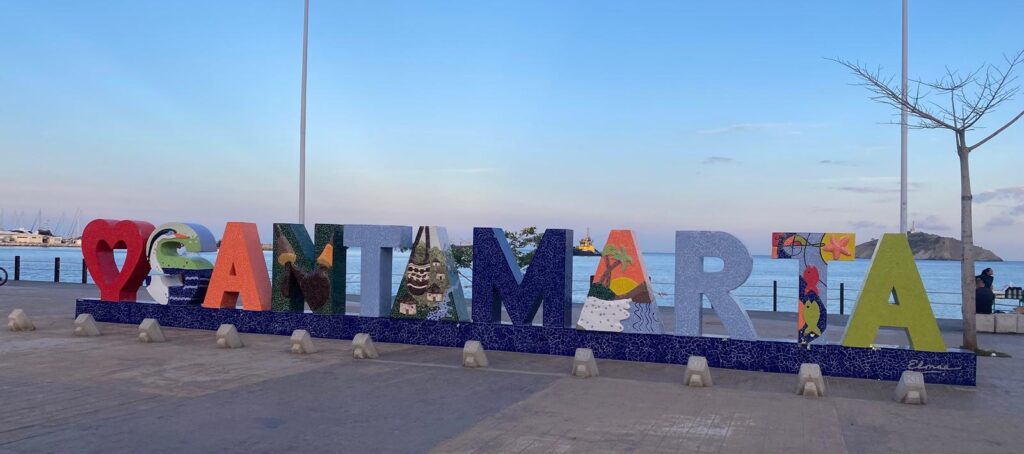
Santa Marta, a busy port city on Colombia’s Caribbean coast, was a symbolic location. Giant oil tankers move in and out of the harbor every day, a visible reminder of how deeply the global economy still depends on fossil fuels.
Researchers, governments, civil society organisations, think tanks, activists and business representatives from 57 countries participated in the week-long conference, together representing roughly one third of global GDP. The atmosphere felt noticeably different from other climate meetings I have attended. There was less focus on diplomatic wording and more willingness to discuss the core issue directly: fossil fuels themselves. That shift matters because it moves the discussion beyond emissions management and toward addressing the fossil fuel system and the global economic dependency surrounding it.
Today, around 75% of the world’s countries are net importers of fossil fuels, making it clear how difficult the transition will be unless deeper structural issues are addressed. Many governments remain constrained by debt burdens, legal frameworks and economic dependencies that limit investments in transition. Questions around Investor-State Dispute Settlement (ISDS), financial architecture, fossil fuel subsidies and the role of capital markets were discussed far more openly and concretely than is usually the case in multilateral settings.
One of the conference’s greatest strengths was that it created what many described as a “safe space” for countries genuinely interested in transition pathways. That changed the quality of the conversations. Instead of debating whether or when a fossil fuel phase-out should happen, discussions focused on how it could happen politically, economically and socially in the near term. The diversity of actors in the room also mattered. Governments, researchers, civil society organisations, activist-led coalitions and policy experts without strong ties to the fossil fuel industry were able to engage in unusually constructive discussions about policy design, finance, governance and implementation, without avoiding the barriers and complexity involved.
The process will continue with a second conference in Tuvalu next year, co-hosted by Ireland. Three official workstreams will guide the process forward:
- National transition pathways and roadmaps
- Reform of the financial system and fossil fuel subsidies
- Fossil fuel-free trade and international cooperation
There was also a strong emphasis on aligning the process with existing UNFCCC and COP frameworks and the conference report will feed into preparations for COP31 and the broader Global Stocktake process towards GST2. This is important, as parallel systems are rarely effective long term. At the same time, it was clearly necessary to create a new platform where countries and organisations willing to lead could deepen cooperation and move discussions forward more rapidly. My hope is that this momentum can be maintained and translated into meaningful progress ahead of the next conference in 2027.
For GCF, one of the strongest impressions from Santa Marta was seeing how important trusted partnerships and long-term collaboration have become in this emerging space. Several of our partners played visible and influential roles throughout the conference week.
- The Fossil Fuel Treaty Initiative (FFT) was one of the most prominent civil society actors present and helped move the fossil fuel phase-out discussion further into the mainstream.
- Carbon Tracker contributed important expertise on finance and economic transition pathways, particularly related to financial risk and capital flows.
- International Peace Institute played a key role in strengthening the legitimacy of the process by supporting Colombia, the Netherlands and many national delegations through preparation and diplomatic engagement.
- The Science Panel for the Global Energy Transition (SPGET), led by Johan Rockström, Carlos Nobre and others, was launched during the conference and will help provide scientific legitimacy moving forward. The panel aims to maintain momentum by developing transition roadmaps based on the best available science and research.
- Discussions connected to International Climate Council Network (ICCN) also gained significant attention, particularly around the role national climate councils can play in developing credible national transition roadmaps and strengthening implementation capacity.
Global governance needs stronger governance infrastructure if it is to function effectively and justly, and I believe our partners in Santa Marta all contributed meaningfully to building that foundation.
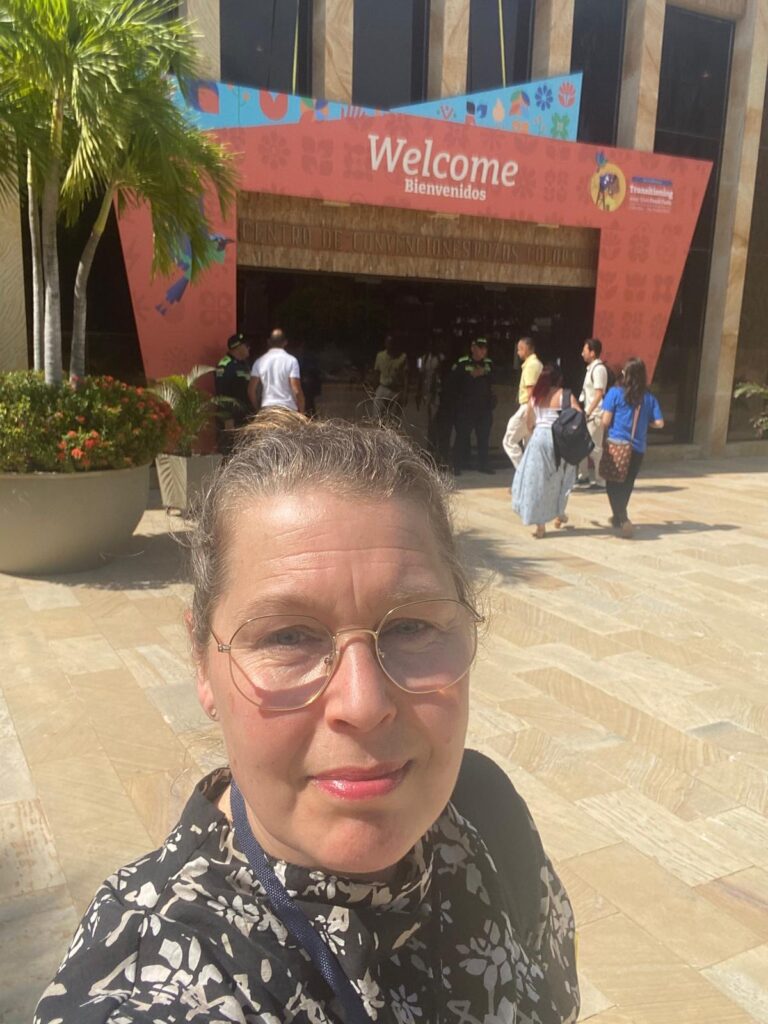
Eva outside of the Conference hall in Santa Marta
Another reflection I left Santa Marta with is that multilateralism may not be as weak as many currently assume. Despite geopolitical tensions and frustrations within the COP process, there was a clear appetite for international cooperation around fossil fuel transition. Several participants admitted they had underestimated the level of interest before the conference began. Nearly 60 states were represented in the final high-level forum.
Of course, major uncertainties remain. Political developments, financing challenges and tensions between different actors and coalitions could still complicate the process moving forward. But leaving Santa Marta, I felt something I have not felt in a long time which is a cautious sense of momentum. Not because the solutions are simple, because they are not, but because the conversation itself finally seems to be moving in the right direction, and with greater pace.

Head of Climate and Sustainability at GCF