GCF at London Climate Action Week
Anja, Eva, and Lewis from GCF were in London along with an estimated 750,000 others attending a selection of the over 1,000 events. Lewis shares his takeaways from the week below.
Temperatures nearing 40 degrees, train disruptions, sweltering trips on the underground, and ironically, a discussion about extreme heat being cancelled. All due to the heatwave that swept through London at the end of last month during London Climate Action Week. As was mentioned at almost every event we were at, there was potentially no better timing to drive home just how dire the current situation is.
I was in London, together with the Foundation’s head of Climate and Sustainability, Eva Mineur, and our newly appointed Executive Director, Anja Olin-Pape. With over 1,000 events attended by more than 75,000 people throughout the week, it was a busy few days for GCF and everyone attending London Climate Action Week.
As always, improved governance for handling catastrophic risks such as climate change was the focus for us during the week and we were able to sponsor and co-host multiple events on various aspects of global climate governance.
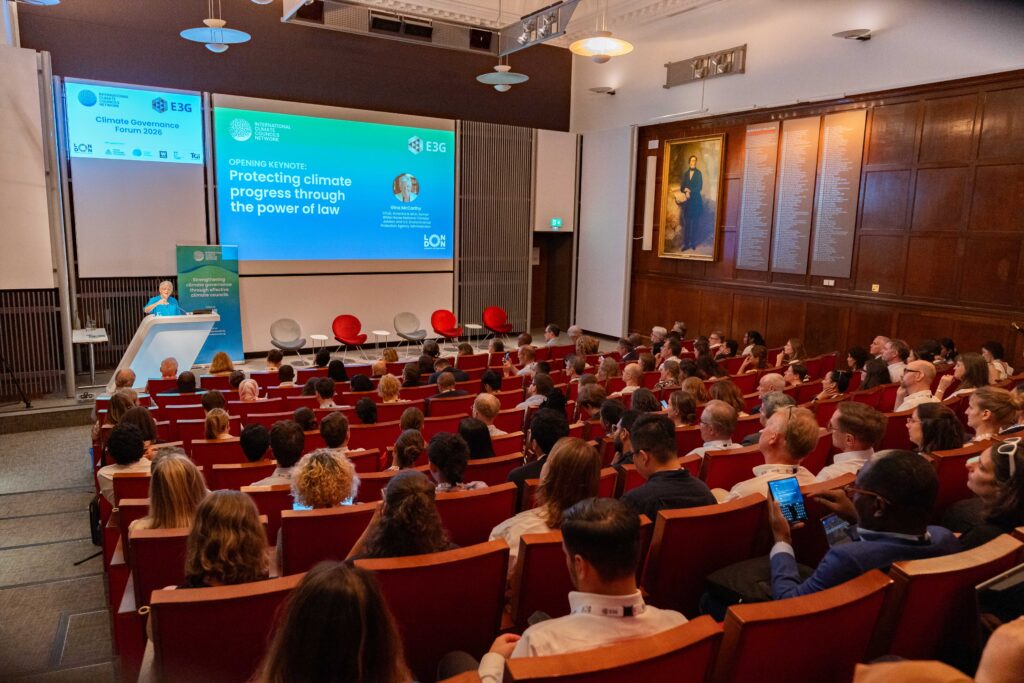
Gina McCarthy delivering the keynote at the Climate Governance Forum, hosted by the International Climate Council Network
One of the marquee events of the week was the International Climate Council Network’s Climate Governance Forum. The 200 attendees, nearly 40 of whom were representatives from 18 different climate councils internationally, were welcomed out of the heat by an urgent and inspiring keynote from Gina McCarthy, Chair of America Is All In, and former White House National Climate Advisor. The rest of the morning was filled with multiple panel discussions and breakout sessions with a vast array of climate and policy professionals sharing their expertise gained from national climate councils and other organisations, as well as discussing potential new innovations in climate governance. Many ideas and themes came up throughout the discussions, but one of the points that was echoed at other events was the need for improved continuity and stability in both national and international climate governance systems. A second theme was the increasing risk of disinformation about climate change and risks, and at the same time, a desire from the general public for more nuanced and detailed information and facts about the climate, particularly on social media.
The rest of our first two days in London consisted of the three of us spreading out over the city to attend as many different events and catch up with as many partner organisations as possible. Unfortunately, it wasn’t possible to fit in all the events we wanted to (or even list them all), but some of the highlights were a panel discussion on Climate Finance for Just Transitions co-hosted by Plataforma CIPÓ, another panel discussion on next steps after the Santa Marta Conference hosted by Carbon Tracker which featured another of our partners, Fossil Fuel Treaty, and two roundtable discussions, one hosted by Igarapé and another by the Global Commons Alliance.
Fragmentation and lack of coordination within work around climate risks and governance are themes that come up often in our work, and weren’t missing from London Climate Action Week. During our final day in London, we organised two roundtable discussions that brought together other philanthropic organisations to discuss and explore potential ways we as funders can work more strategically and cooperatively.
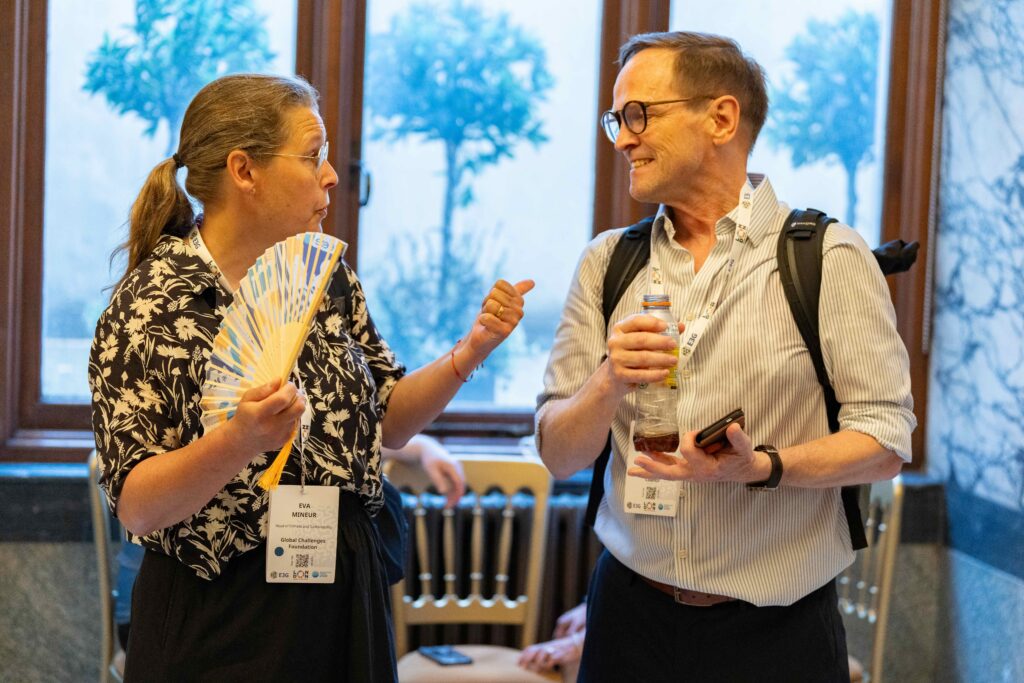
GCF Head of Climate and Sustainability Eva Mineur staying cool during an event at London Climate Action Week
Despite a packed agenda, we managed to find time and the last few bits of energy late on our final night to cheer on Sweden as they made it through to the knockout stages of the Football World Cup.
All in all, London Climate Action Week was a powerful reminder of just how large the risks of climate change are, and how much work there is still to be done. But it was also a reminder of how many people and organisations are willing to do that work, and believe in global governance as a tool to create a safe and just planet.

Communications Officer, GCF