What is the risk?
These systems can tolerate some impact from human use and recover after a period of time with minimal negative effects — an attribute generally known as resilience. However, when pressure exceeds critical thresholds, or tipping points, sudden and radical disruption can oc-cur. These tipping points may trigger cascading effects that spread through the climate, the biosphere and human systems. Beyond such thresholds, soil fertility, freshwater supplies and biodiversity can collapse and severely undermine agriculture and the habitability of large regions on Earth[1].
What is at stake?
Historical and current examples reveal the fragile balance between humans and ecosystems[2]. The Aral sea, for example, was once the world’s fourth largest lake. However, it shrank by 90 per cent due to large-scale irrigation projects, devastating regional livelihoods by causing significant environmental, economical and public health problems[3].
In today’s interconnected world, local crises and ecological disruptions can cascade far beyond their origin, disrupting food systems, driving migration and fueling political instability. Scientists warn that crossing multiple Earth system thresholds could lead to the rapid collapse of most ecosystems across the planet[4] compromising the biosphere’s ability to to support human life.
In 2009, researchers identified nine interconnected planetary boundaries that define a safe operating space for humanity. Recent assessment shows that seven of these have now been exceeded[5]. Crossing the limits of these boundaries — including land-system change and the use of certain fertilisers — signals that we are operating outside the stable conditions that allow civilisations and nature to thrive. The longer these pressures continue, the greater the likelihood of triggering large-scale, potentially irreversible shifts in the global ecological system[6].
In today’s interconnected world, local crises and ecological disruptions can cascade far beyond their origin
What are the driving forces behind risk levels?
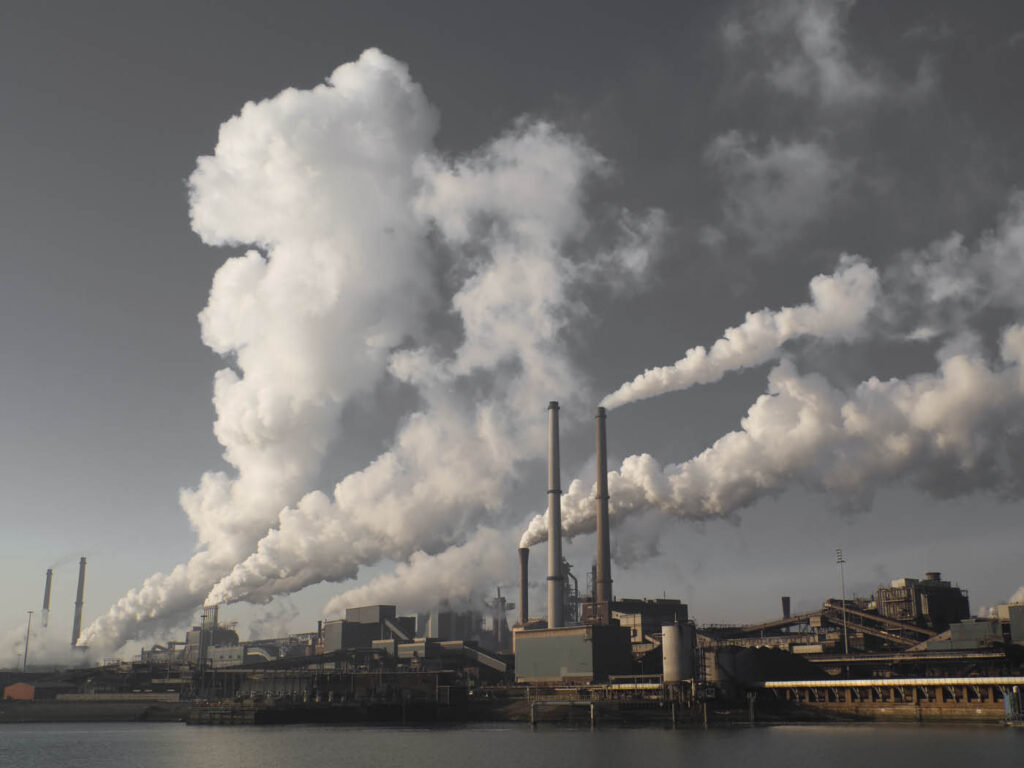
Human activities from greenhouse gas emissions and resource exploitation are severely degrading ecosystems worldwide. While climate change intensifies impacts, such as forest fires[7], coral loss[8] and melting ice[9], human activities, such as forestry, agriculture, mining, and infrastructure, continue to be critical drivers of ecosystem change. Limiting land clearance and ecosystem conversion is essential to prevent further biodiversity loss and ecosystem col-lapse.
The drivers behind the interconnected crises of ecosystem degradation and climate change are deeply intertwined. The continued burning of coal, oil and gas coupled with deforestation and the depletion of peatlands and coastal wet-lands continue to erode natural carbon sinks. Patterns of growth, trade and finance reinforce norms and behaviors that slow down transition, while inequality and political inaction amplify environmental stress. High-income countries and emission-heavy industries bear the largest responsibility for mitigating emissions and accelerating the transition towards sustainable pathways, while those least responsible experience the most severe impacts from both climate change and ecological collapses.
What is being done to govern the global catastrophic risk of ecological collapse and where are there gaps?
Contemporary ecological risks are increasingly global in scale, scope, and impact with strong levels of interconnection not only across national borders, but across continents. Action to address risks, however, needs to be taken at both global and national levels. The environment is a classic global common good: everyone benefits from its protection, but when some overexploit or pollute it, the consequences and costs are shared by everyone.
Since the establishment of the United Nations Environment Program (UNEP) in 1972, international environmental agreements such as the Paris Agreement on Climate Change, the Convention on Biological Diversity, as well as frameworks on ozone depletion, hazardous waste and desertification, have been the main legal instruments for collective action. However, despite this proliferation of treaties and targets, implementation has lagged far behind ambition. Of the hundreds of global environment and sustainable development targets agreed by countries, only about a tenth have been achieved[10].
This shortfall highlights that the problem is not the absence of rules, but rather the inadequacy of the current system itself. Fragmented, weakly enforced and insufficiently integrated, our current system remains largely designed for a past era of smaller, slower and more localised economic activity. Climate, biodiversity and pollution policies are often treated separately, despite their deep interdependence. Many countries also lack reliable systems for data, monitoring and accountability. The distribution of economic and environmental benefits and burdens continue to reflect deep structural inequalities. Efforts are underway to bridge these divides. More than 100 countries now incorporate biodiversity values into their national accounting systems[11] and there is growing recognition by banks, financial institutions and the private sector that planetary stability underpins global prosperity[12]. Still, the pace of progress remains too slow compared to the speed of economic growth and environ-mental decline.
Bridging this governance gap will require firm-er accountability mechanisms, coordinated international financing, redistribution of burdens and benefits, but also adaptive governance and systems capable of learning, responding and evolving with changing ecological realities. This in turn demands confronting the deeper, underlying drivers of ecological collapse, including entrenched inequalities and economic structures that perpetuate unsustainable exploitation. The challenge ahead is not a lack of knowledge or policy but the collective will and institutional transformation needed to act decisively within the time we have left.
Other risk overviews

Weapons of Mass Destruction – overview
What is the risk? Hostile geopolitical relations and the deteriorated strategic context are eroding the structures that govern the world’s…

Artificial Intelligence – overview
How is AI integrated in military decision-making? Several countries now incorporate AI into their military operations through decision support systems…

Near Earth Asteroids – overview
What is the risk? NEOs, asteroids and the occasional comet, are objects that travel close enough to Earth’s orbit to…
Catastrophic Climate Change – overview
What is the risk? Climate change is the long-term alteration of the Earth’s climate system, driven primarily by the accumulation…