What is the risk?
Climate change is the long-term alteration of the Earth’s climate system, driven primarily by the accumulation of greenhouse gases. This warming affects the atmosphere, oceans, land and cryosphere — the systems that regulate stability of the planet. Every year in the past decade (2015–2024) has ranked among the warmest on record. The global mean temperature for 2024 was 1.55°C above the 1850–1900 pre-industrial average, according to the World Meteorological Organization[1]. While short-term variations occur, the long-term trend is unmistakable: the planet is warming at an accelerating pace.
A single year above the 1.5°C threshold set by the 2015 Paris Agreement does not mark permanent overshoot but shows how close we are to destabilising key Earth systems. Even at today’s levels, intensifying heat-waves, droughts, wildfires and floods are straining societies with the harshest impacts on those least responsible for emissions. The risk lies not only in continued warming but in cascading disruptions that could move the climate beyond humans’ ability to adapt and manage it. Each fraction of a degree narrows the space for stability.
The risk lies not only in continued warming but in cascading disruptions that could move the climate beyond humans’ ability to adapt and manage it.
What is at stake?
If warming exceeds 1.5°C, it will lead to increasingly frequent and dangerous extreme weather events[2]. Every additional 0.1°C of global warm-ing increases the intensity and frequency of temperature extremes, both now, when the Earth systems are considered stabilised, and in
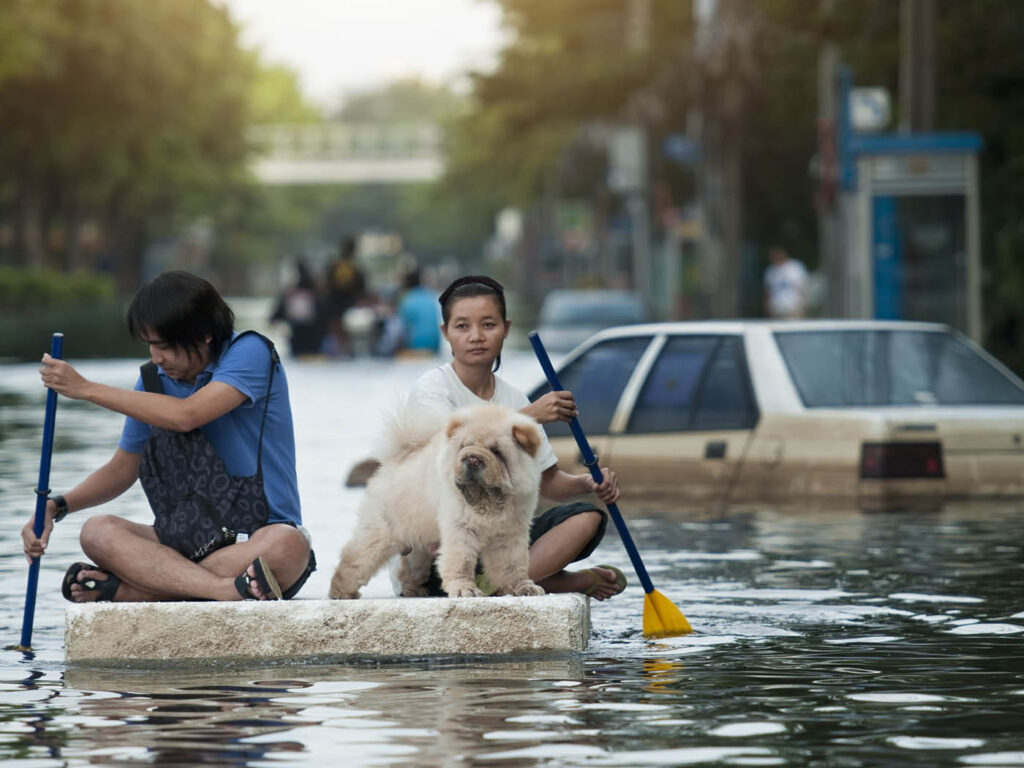
the overshoot period beyond the 1.5°C warming threshold[3]. In a more extreme scenario, where warming exceeds 3°C, the planet could shift to climate conditions unseen for millions of years[4]. Sea-level rise, crop failures and extreme heat would render regions uninhabitable and trigger mass displacement. Ecosystem collapse would undermine food, water and climate regulation.
Climate change is not linear: once tipping points are crossed, self-reinforcing feedbacks — melting ice, thawing permafrost, dying forests — can accelerate more change. Some systems are already near these limits.Coral reefs, for instance, have passed their tip-ping point and may functionally collapse within a decade[5]. The Global Tipping Points Report (2025) warns that averting coral reef collapse will require swift, coordinated global action to limit overshoot beyond 1.5°C and bring temperatures back below 1.0°C in the long run.
What are the driving forces and causes?
Climate change is driven by a combination of physical, economic and social forces that together disrupt the Earth’s energy balance and carbon cycle. These drivers can be grouped into four interrelated areas.
- Greenhouse gas emissions from human activity
The dominant cause of global warming is the accumulation of greenhouse gases in the atmosphere. According to the Intergovernmental Panel on Climate Change (IPCC), emissions from fossil fuel combustion, industry and agriculture are responsible for nearly all observed warm-ing since the mid-20th century. Carbon dioxide accounts for about three-quarters of global emissions, largely from energy and transport, while methane and nitrous oxide from livestock, fertilisers, and waste add substantially to the planet’s warming.
- Land use and ecosystem degradation
Deforestation, land conversion, and the loss of peatlands and coastal wetlands release stored carbon and weaken natural carbon sinks. These ecosystems also moderate local climates and store moisture; their destruction intensifies regional warming, drought and biodiversity loss. Land-use change accounts for roughly one-fifth of historical emissions and continues to erode the biosphere’s capacity to regulate the climate.
- Economic and structural dependence on fossil fuels
The global economy remains locked into high-emission infrastructure and consumption systems — from energy and transport to industry and food. Capital, trade and subsidies reinforce this dependence, creating powerful inertia that delays transition.
- Social, political and behavioural drivers
Lifestyles, consumption patterns and inequitable resource use contribute substantially to emissions disparities both within and between nations. Wealthier populations have far higher per capita footprints, while limited awareness and delayed policy action reinforce the trajectory. Together, these social and political dynamics sustain the structural causes of climate change.
What is being done to govern catastrophic climate change and where are there gaps?
Global climate governance is anchored in the Paris Agreement, where nations pledged to limit warming to well below 2°C and pursue efforts to stay below 1.5°C. However, current national pledges remain far below what science indicates is necessary.
Successive UN Climate Conferences (COPs) have advanced climate diplomacy through new pledges on loss and damage, methane and deforestation. However, climate policies remain fragmented — separated from related domains such as biodiversity, energy, food, and finance — despite their deep interconnections. This lack of systemic integration weakens collective capacity to anticipate and manage cascading risks.
Unequal access to finance and technology as well as lack of institutional capacity further limits the ability of countries, not least low- and middle-income countries, to both adapt and transition away from fossil fuels.
Beyond technical and economic barriers lies a deeper leadership gap. There is a huge implementation gap in relation to what is needed according to science. This underscores the urgent need for strong accountability mechanisms at local, national and global levels to ensure that climate pledges translate into concrete, sustained implementation. Avoiding catastrophic climate change requires political courage to confront vested interests and align economic priorities with the Paris Agreement and planetary boundaries. Incremental diplomacy and short-term agendas are no longer sufficient.
Other risk overviews

Ecological Collapse – overview
What is the risk? These systems can tolerate some impact from human use and recover after a period of time…

Weapons of Mass Destruction – overview
What is the risk? Hostile geopolitical relations and the deteriorated strategic context are eroding the structures that govern the world’s…

Artificial Intelligence – overview
How is AI integrated in military decision-making? Several countries now incorporate AI into their military operations through decision support systems…

Near Earth Asteroids – overview
What is the risk? NEOs, asteroids and the occasional comet, are objects that travel close enough to Earth’s orbit to…