Governing the unthinkable: Imagination and responsibility in the age of Earth system tipping points
At the mouth of Ilulissat Icefjord, the Jakobshavn Glacier lurches forward about forty metres a day. Each summer, its face leans toward the sea, heavy with centuries of compressed snowfall, until something inside it gives. A crack begins high up in the wall of ice. Then, it widens and deepens until a city-sized block slides forward. The sound is less an explosion than a deep, resonant exhale, a noise you feel in the chest. The newborn iceberg turns and moves out to sea.


Manjana Milkoreit is a researcher at the University of Oslo studying global climate governance with a focus on tipping points and non-linear risks, intergenerational decision making, and future imagination. She co-led the governance work for the Global Tipping Point Reports 2023 and 2025.
Scientists log the event, but the real data point is invisible: another infinitesimal step toward a planet reorganising itself. The moment is both ordinary and epochal — another Tuesday in Ilulissat, a threshold in the Earth system[1]. What is breaking here is not just ice, but the continuity that governance depends on. The rules we’ve written for a stable world no longer fit the one that’s forming in front of us.
From control to navigating complexity: What makes tipping points different
The Greenland Ice Sheet is only one of more than 20 recognised tipping elements in the Earth system, including ocean currents, forest biomes, permafrost and monsoons[2],[3],[4]. Several features differentiate tipping points from the climate change we are accustomed to managing, transforming the basic gram-mar of governance[5].
Thresholds and reorganisation: Conventional climate governance assumes continuity[6]. It relies on temperature targets, carbon budgets and sea-level projections — tools suited to gradual, predictable, reversible change. The Paris Agreement’s 1.5°C goal, for instance, presumes a stable relationship between emissions and impacts; national adaptation plans proceed as if change will remain incremental along one of the IPCC’s scenarios. But tipping processes violate that logic. They are moments of commit-ment to irrevocable systemic shifts. When thresholds are crossed, Earth systems do not simply deteriorate — they become something new. An unfamiliar territory for social organisation and human development. Governance can no longer aim only to optimise within a stable baseline; it must anticipate disruption, prioritise prevention and learn to navigate complexity. A first important case is the world’s warm water coral reefs, which have now reached their tipping point and are likely to experience dieback over the coming two decades[4].
[Tipping processes] are irrevocable systemic shifts.
This requires a shift toward precautionary, adaptive and integrative governance approaches that recognise uncertainty and work across domains. Climate, biodiversity, marine and land systems cannot be governed in isolation when the processes binding them together may reorganise as one. Today’s institutional silos must give way to governance capable of navigating the dynamics of the whole.
Temporal dislocation and irreversibility: The second challenge is temporal. Tipping points collapse time in the moment of crisis yet expand it indefinitely through their consequences. The dieback of the Amazon or the loss of the Greenland Ice Sheet unfold over decades, centuries and millennia. But the decisions that determine these outcomes are being made now, within election cycles, planning periods and fiscal years.
This temporal dislocation compresses moral and political responsibility in the present: we hold unprecedented power to shape conditions far beyond our own lifetimes. Traditional democratic structures struggle to represent such extended futures. Recent court decisions have highlighted this failure, for example, the German Federal Constitutional Court’s 2021 ruling affirming the rights of future generations[7].
Governing tipping points therefore demands anticipatory and intergenerational capacities — institutions that can sense early warnings, act before certainty and give political voice to those who will live with the results.
Cascades and systemic ripples: What begins at Jakobshavn does not stay in Greenland. The ice released into the Labrador Sea changes the density of the ocean, nudging the great Atlantic circulation that shapes weather across half the planet[8],[9]. Far away, rainforests dry quicker than before, and the rhythms of the monsoon begin to drift[10]. Such connections reveal a deeper insight: tipping points are not only regional breakdowns but planetary reorganisations[11].
Tipping impacts also unfold in cascades across coupled systems, such as coral bleaching leading to decline in fish stocks, which leads to decreased fish catches and dwindling incomes, growing hunger and migration. Effective governance must therefore become systemic — aware of linkages, able to detect cross-scale interactions and coordinate responses across policy arenas, jurisdictions and timeframes[12].
Emerging scholarship on Earth system governance and complexity points toward this evolution: reflexive, polycentric and inclusive forms of decision-making that treat governance itself as an adaptive system[13],[14]. Yet most political architectures remain designed for stability within siloes, not surprise within systems.
To govern tipping points, then, is to navigate Earth-human-system transformation — to steer societies toward wellbeing and habitability[15] as the Earth reorganises.

The moral imagination of planetary governance
Earth system tipping dynamics dissolve the familiar boundaries of time, space and responsibility. Governance is no longer only about managing emissions or protecting ecosystems; it becomes about imagining the future as latent — something already unfolding through our choices[16].
Meeting this challenge demands more than institutional reform. It calls for imagining a new approach to governance — one that sees the Earth as a dynamic, interdependent system with humanity as both participant and agent of change. The imagination of the past was centred on how to predict and control. The imagination needed now asks what forms of care, restraint and cooperation are possible when feedbacks transcend borders, scales and timeframes.
The Global Stocktake under the Paris Agreement gestures toward this planetary imagination. Conceived as a collective moment of reflection and course correction, it invites nations to evaluate progress toward long-term goals not in isolation but as co-authors of a shared trajectory. Yet, its potential remains constrained by short-term logics — national interests, five-year cycles and incrementalism.
Democratic governance faces both peril and promise here. Its short-term cycles make it illsuited to deep time, yet its capacity for collective deliberation offers the best hope of navigating it. Democracy must expand — through time, to represent future generations, and across space, to embrace the interdependence of Earth’s systems.
Innovations such as citizens’ assemblies — deliberative forums that gather diverse publics to confront complex choices — illustrate how this imagination might be institutionalised. Operating at local to planetary scales, they offer venues where moral reasoning and scientific understanding meet.
Imagination, in this sense, is not escapism; it is a governance capacity. The capacity to picture what does not yet exist — to deliberate about worlds we will not personally inhabit — is what allows governance to stretch beyond the present moment.
This is, ultimately, a moral task — one today’s youth climate movements are already advancing, grounded in a lifetime-spanning concern for a shrinking human niche on Earth[17]. To govern tipping points is to decide what forms of life and relation we wish to preserve. It requires humility about what cannot be known, and courage to act before it is. Our task is not to control the Earth’s transformation, but to participate in it wisely — ensuring that as the planet’s great stabilising systems approach thresholds, our values keep up with the immensity of the challenge.
The dieback of the Amazon or the loss of the Greenland Ice Sheet unfold over decades, centuries and millennia
Conclusion: A mandate for imagination
Every calving is an ending and a beginning. The cryosphere remakes itself, and so must we. For decades, we governed as if the planet would yield to management plans, targets and self-interests, as if linear progress pursued in national boundaries could hold a nonlinear world that ignores borders and scales. But here, among the echoes of ice collapsing into water, governance meets its limit — and perhaps its renewal.
If tipping points mark the boundaries of the Earth’s resilience, they also define the frontier of human responsibility. We cannot govern these risks through management alone; we must reimagine governance itself — as a shared, anticipatory practice capable of shaping transformation before it overtakes us.
The 2030s will determine much of the planet’s long-term trajectory. This decade must therefore be one of institutional imagination: building foresight and early-warning capacities into decision systems; establishing intergenerational representation in parliaments, courts and climate bodies; linking the Global Stocktake to deliberative mechanisms that can translate planetary diagnostics into public purpose.
This is a moment to claim a new public mandate: to make imagination a civic and global responsibility. Institutions, scientists and citizens alike must learn to act across generations and borders, to guide reorganisation rather than resist it. The time for such imagination is now; the mandate is ours.
Manjana Milkoreit is a researcher at the University of Oslo studying global climate governance with a focus on tipping points and non-linear risks, intergenerational decision-making, and future imagination. She co-led the governance work for the Global Tipping Point Reports 2023 and 2025.
Other articles
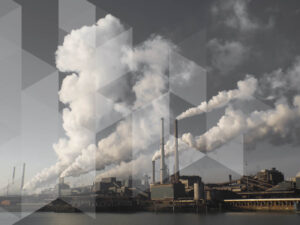
Ecological Collapse
Ecosystems form the living fabric of the planet, regulating the climate, providing food and water, and maintaining the conditions that make human life possible. Since the mid-1950s, many of these systems have been pushed beyond safe limits. Concentrations of greenhouse gases, the loss of forests and biodiversity and the decline of the marine ecosystem health are accelerating, eroding the stability of the Earth system on which societies depend.

Weapons of Mass Destruction
Multi-Domain Escalation Risk Rapid technological advances and expanding multi-domain warfare are reshaping global security, blurring lines between nuclear and conventional…

Artificial Intelligence
AI in military decision-making: The global governance challenge The race to integrate AI into military command systems is accelerating —…

Near Earth Asteroids
Near-Earth objects (NEO) pose a rare but potentially catastrophic threat, ranging from local destruction to global climate disruption. Although detection and tracking capabilities have improved dramatically, vast numbers of smaller asteroids remain unknown. Understanding these risks, and the governance systems designed to prevent impacts, is essential for strengthening planetary defence and global preparedness